NSART Get in touch
Digital twin · live model

See your infrastructure. Test decisions before they reach the object.

A digital twin is a working model of a real asset, connected to it by data. This one is a real data centre in Almaty: walk the building, open the engineering layers and see what the operator sees.

Geometry follows the as-built drawings. Sensor values in the public model are demonstration data; live telemetry is connected within a project.

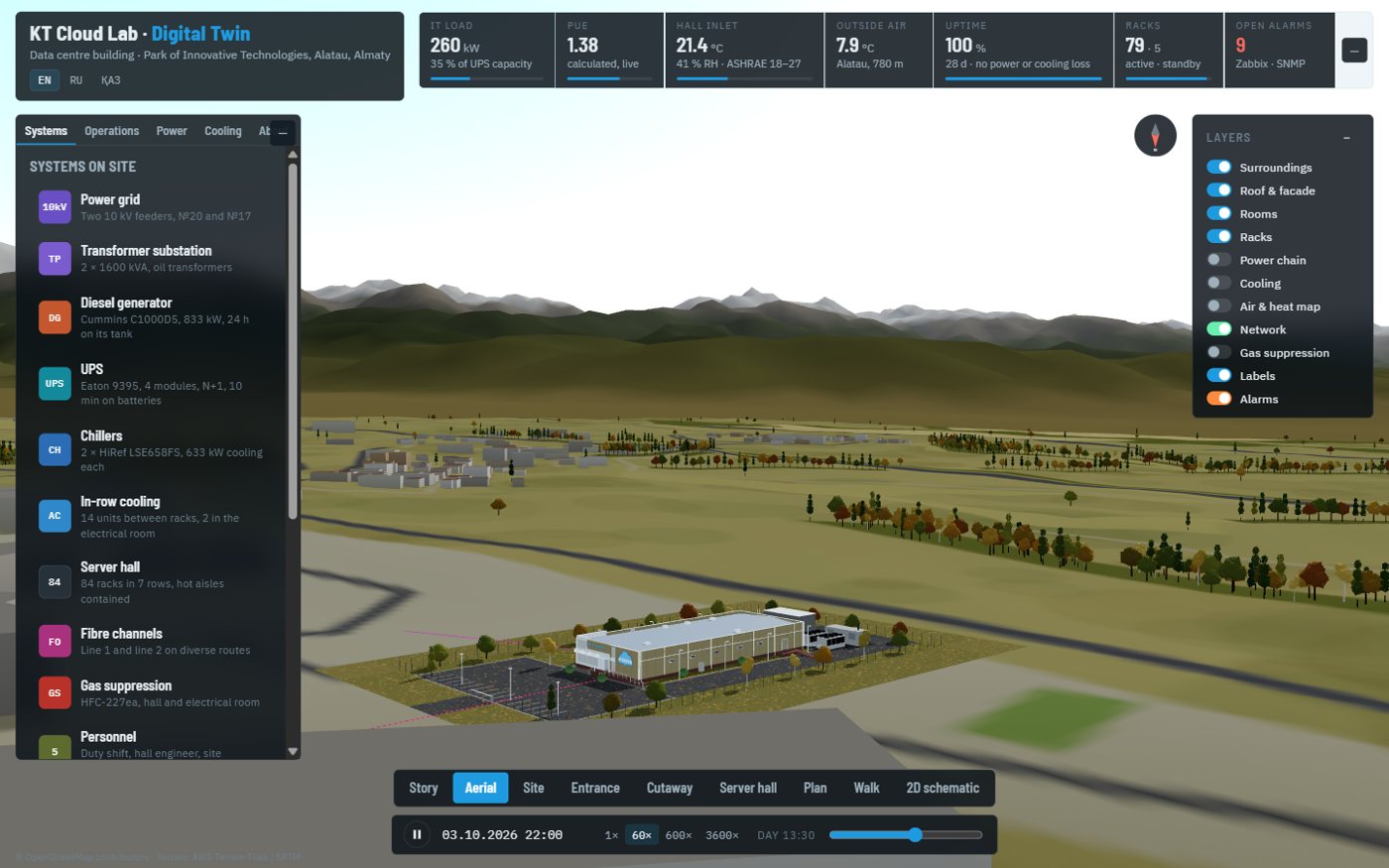
3D model of the KT Cloud Lab building KT Cloud Lab · AlmatyDemonstration data Open the 3D model Rotate, zoom, walk through the rooms, switch the layers.
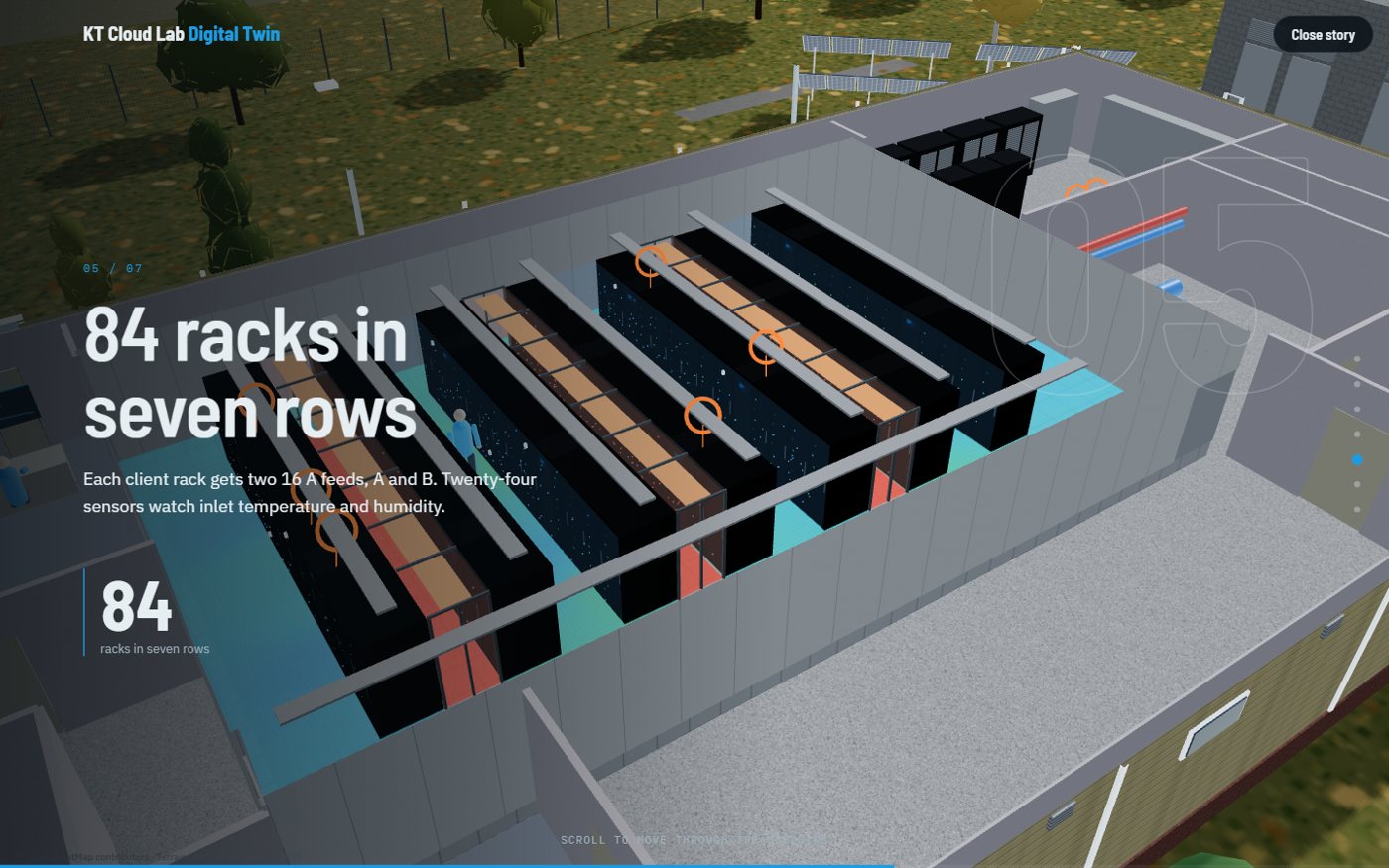
84server racks in seven rows
14in-row coolers
221.7 m²server hall
833 kWstandby generator
What you can do in the model

Everything below is in the published model today.

Not a roadmap — frames captured from the live model.

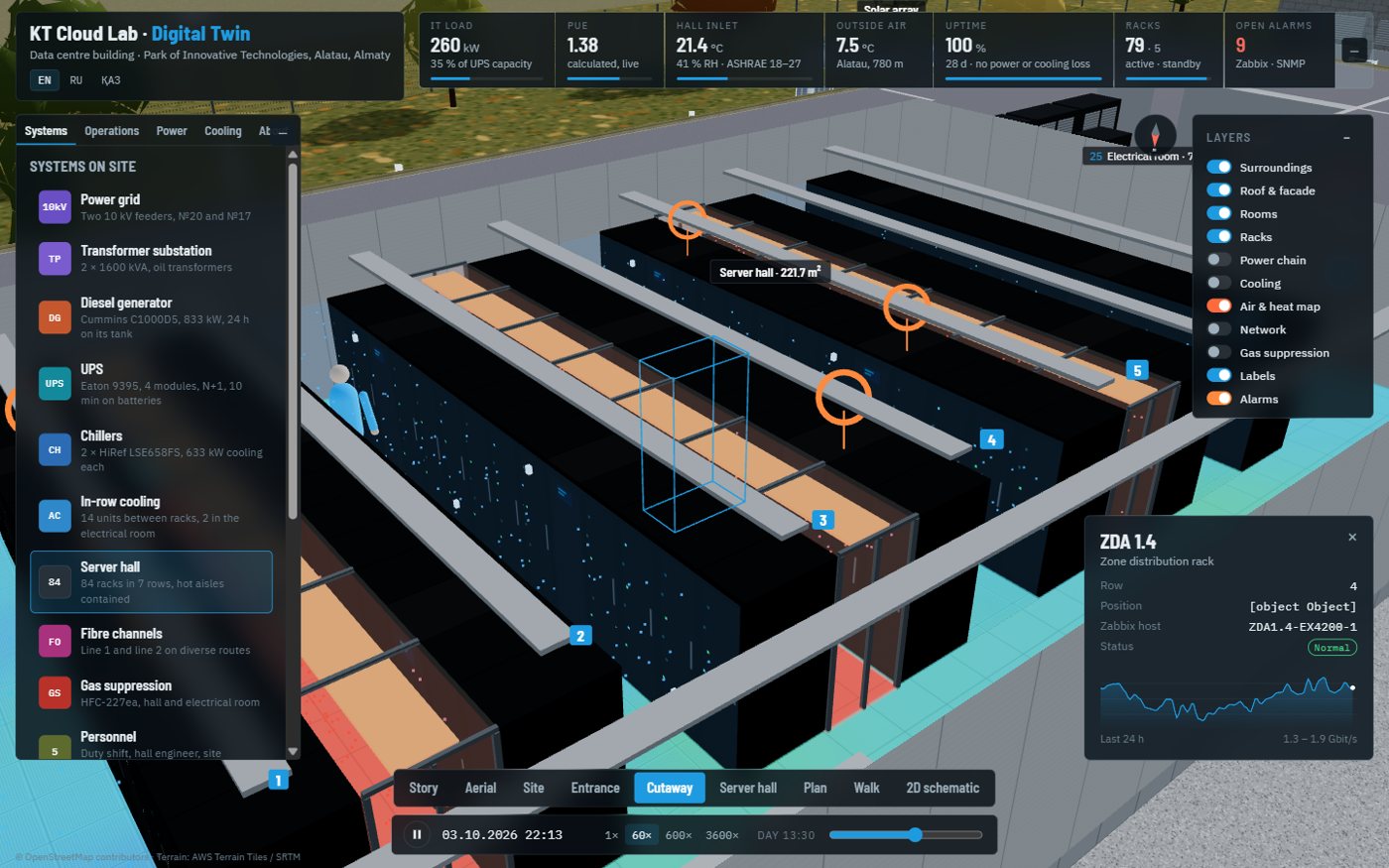
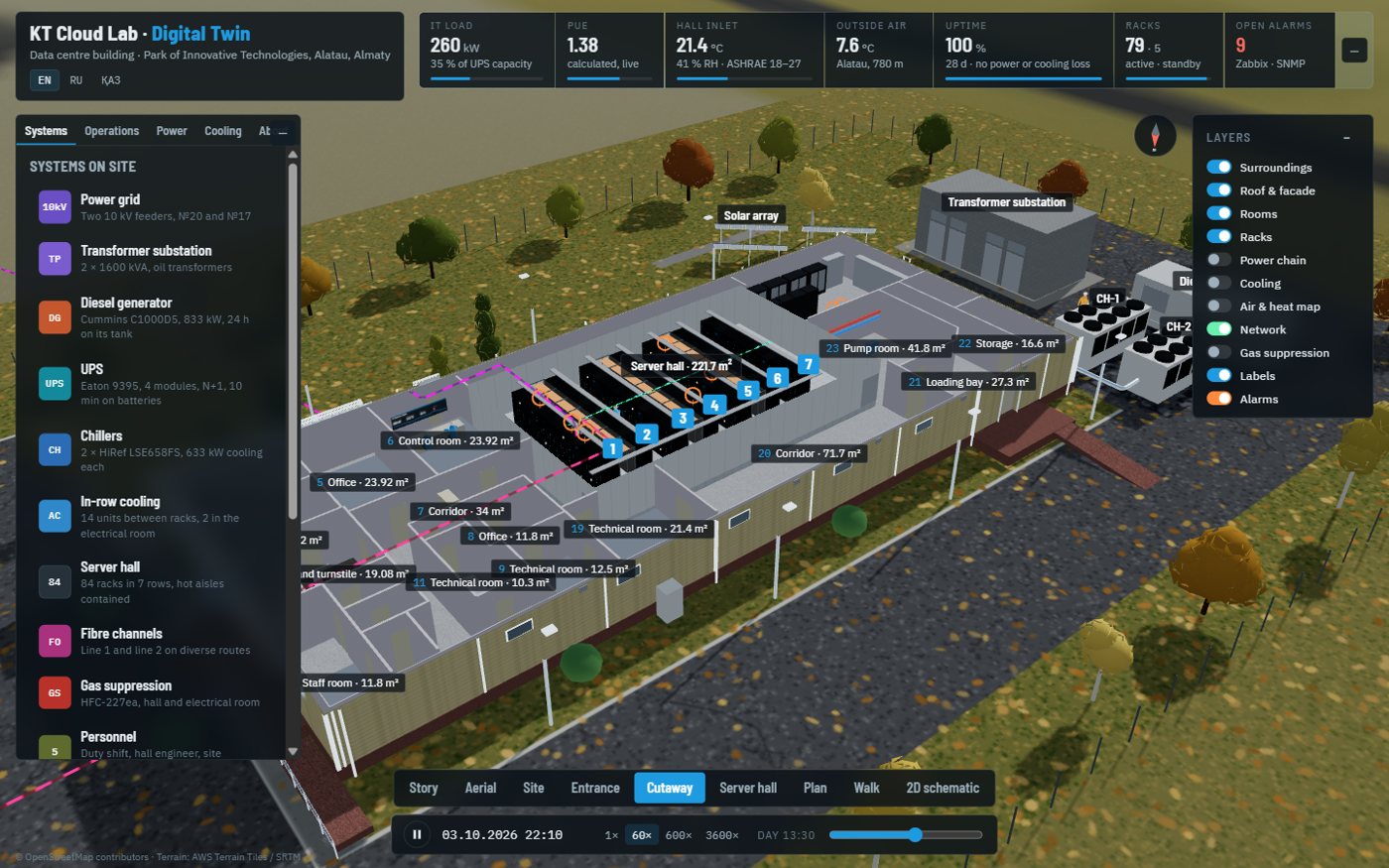
Cutaway view of the building with rooms and racksCutaway view

Walk the building

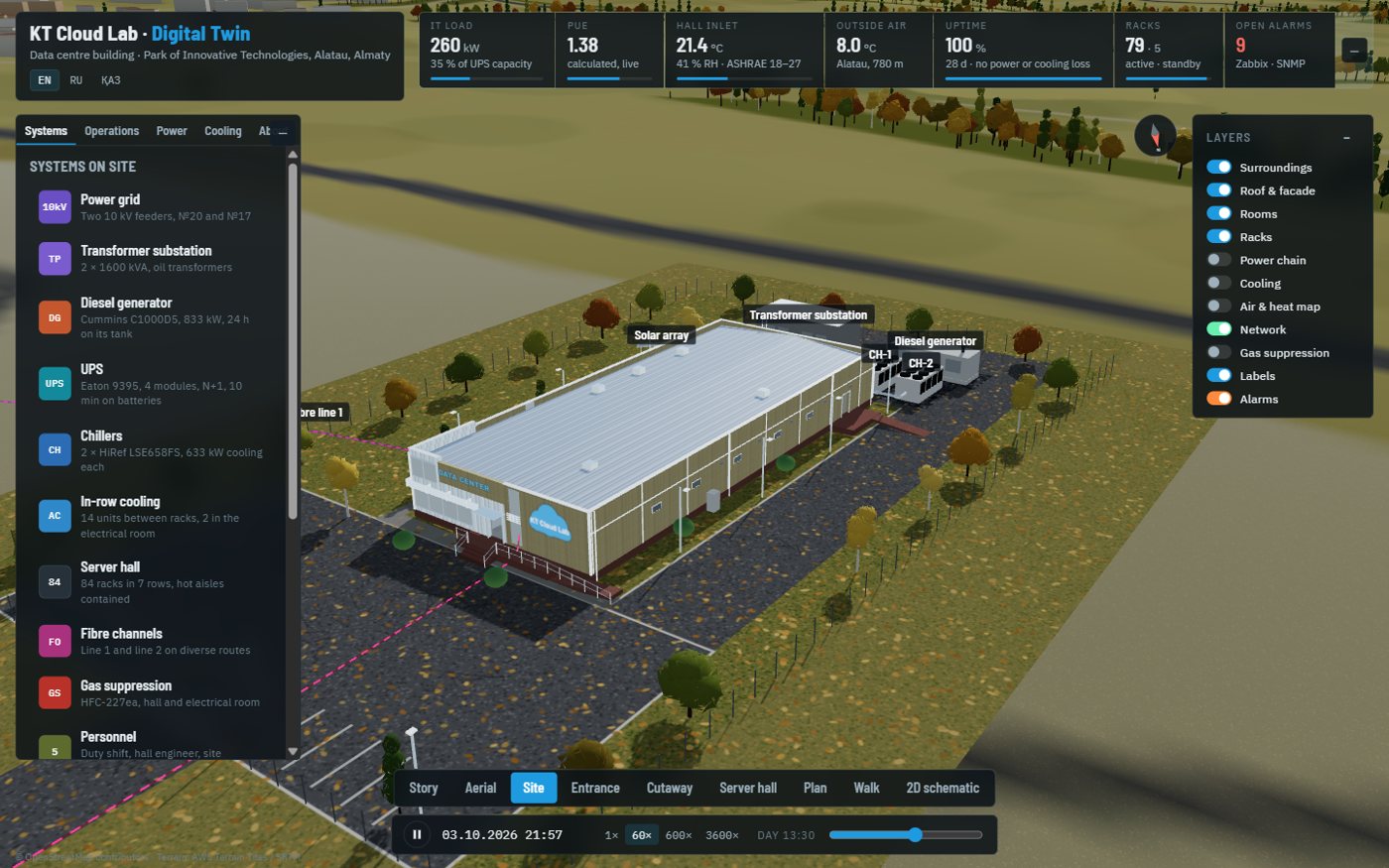
Twenty-six rooms from the as-built plan, the facade from site photographs, a first-person walk-through with real walls and doors.

  • Aerial, site, entrance, cutaway and hall cameras
  • Roof and facade switchable
  • Room labels in English, Russian and Kazakh
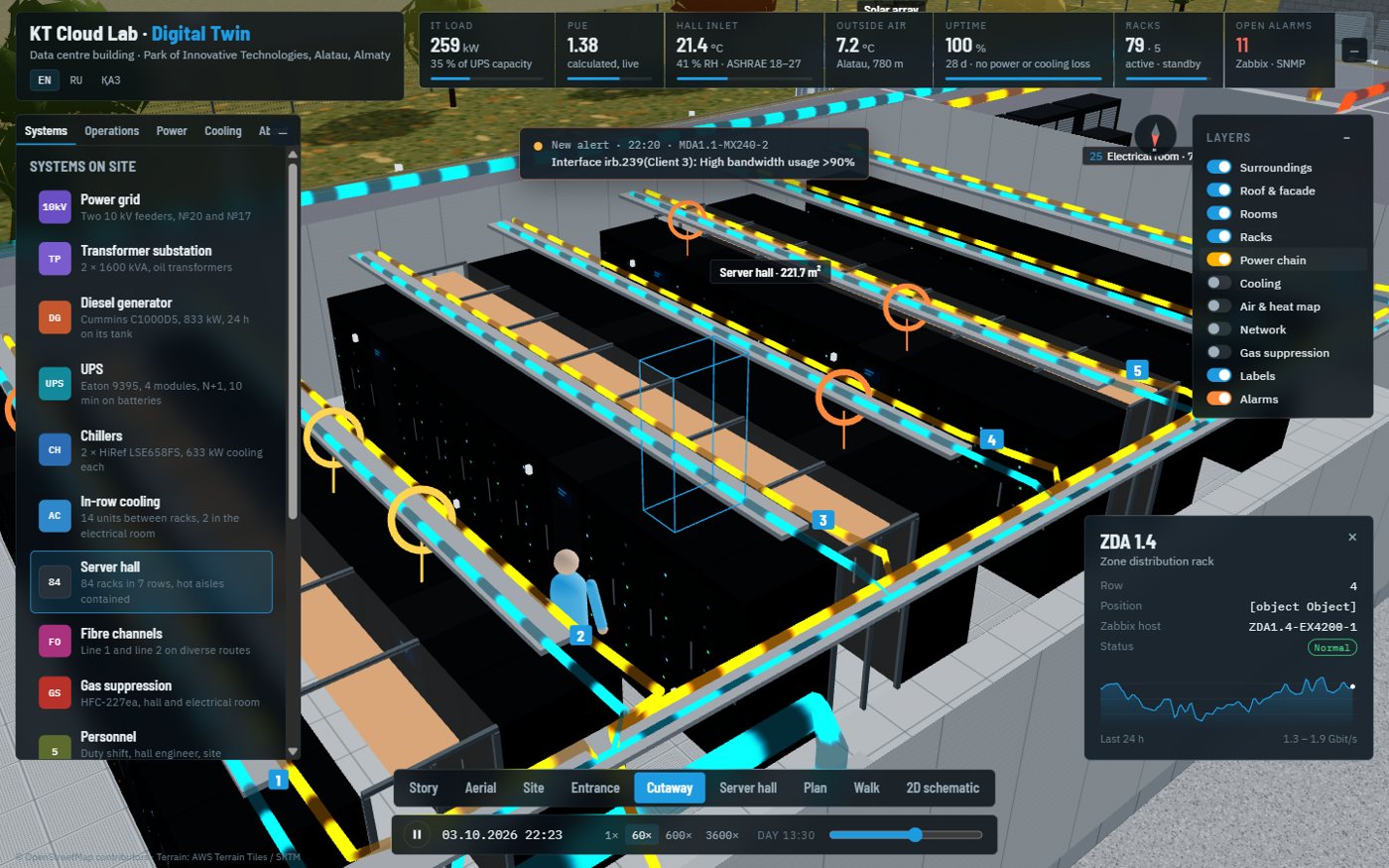
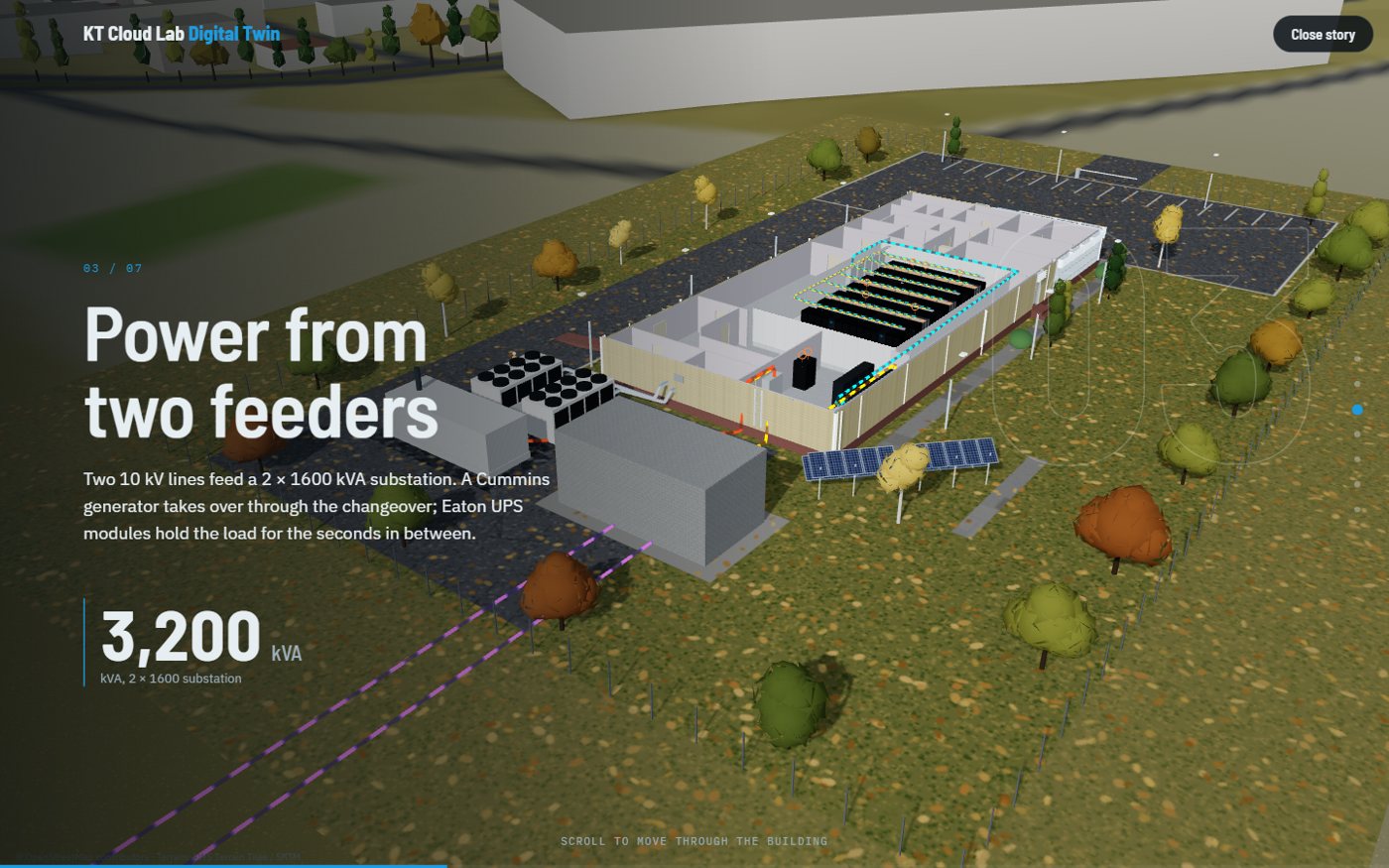
Power chain highlighted over the server hallPower chain layer

Open the engineering layers

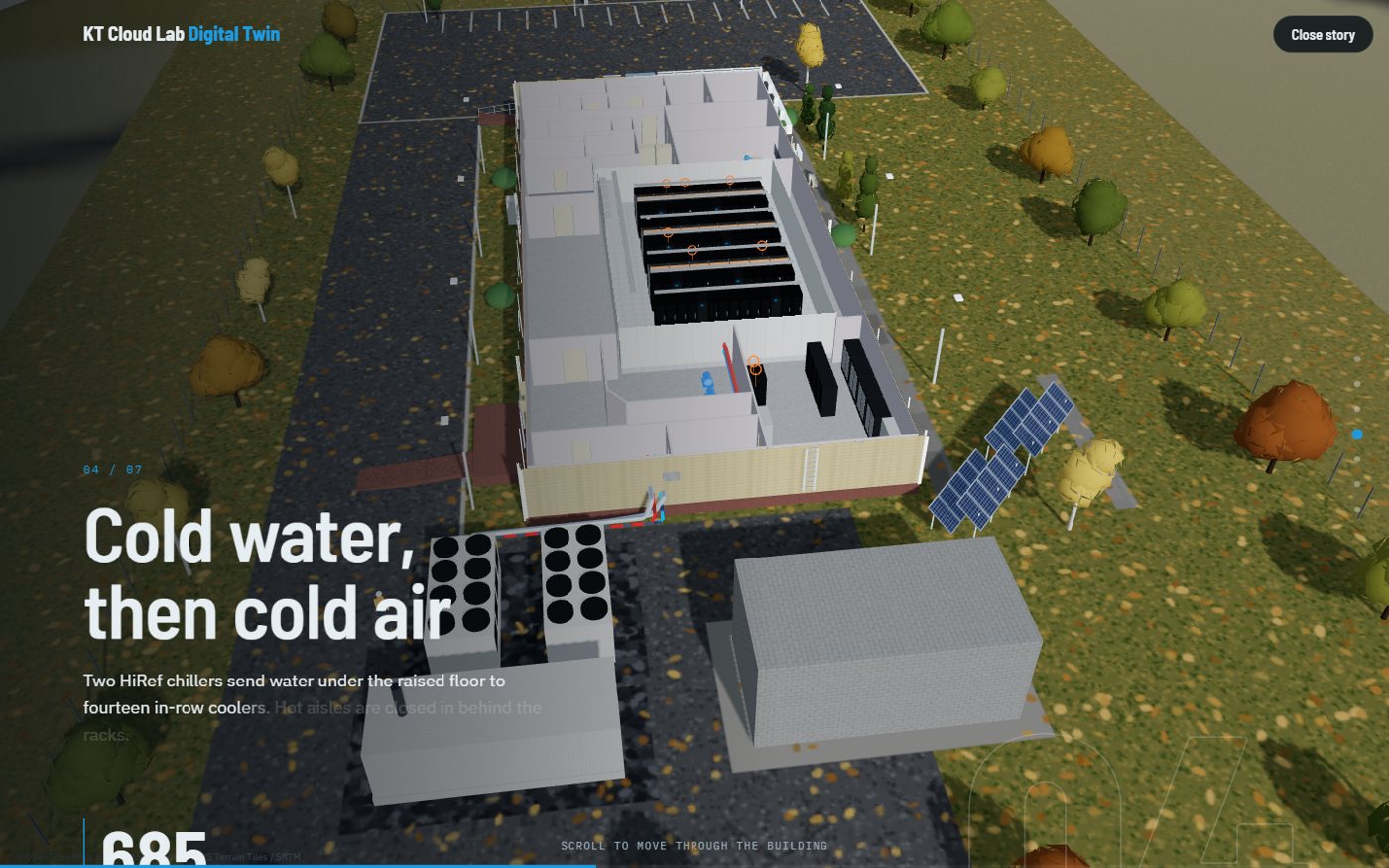
Power chain, cooling, air and heat map, network, gas suppression — layers over one geometry, so the operator and the investor look at the same object.

  • Two 10 kV feeders, 2 × 1600 kVA, Cummins 833 kW, Eaton UPS N+1
  • Two HiRef chillers, fourteen in-row units
  • Fibre on two diverse routes
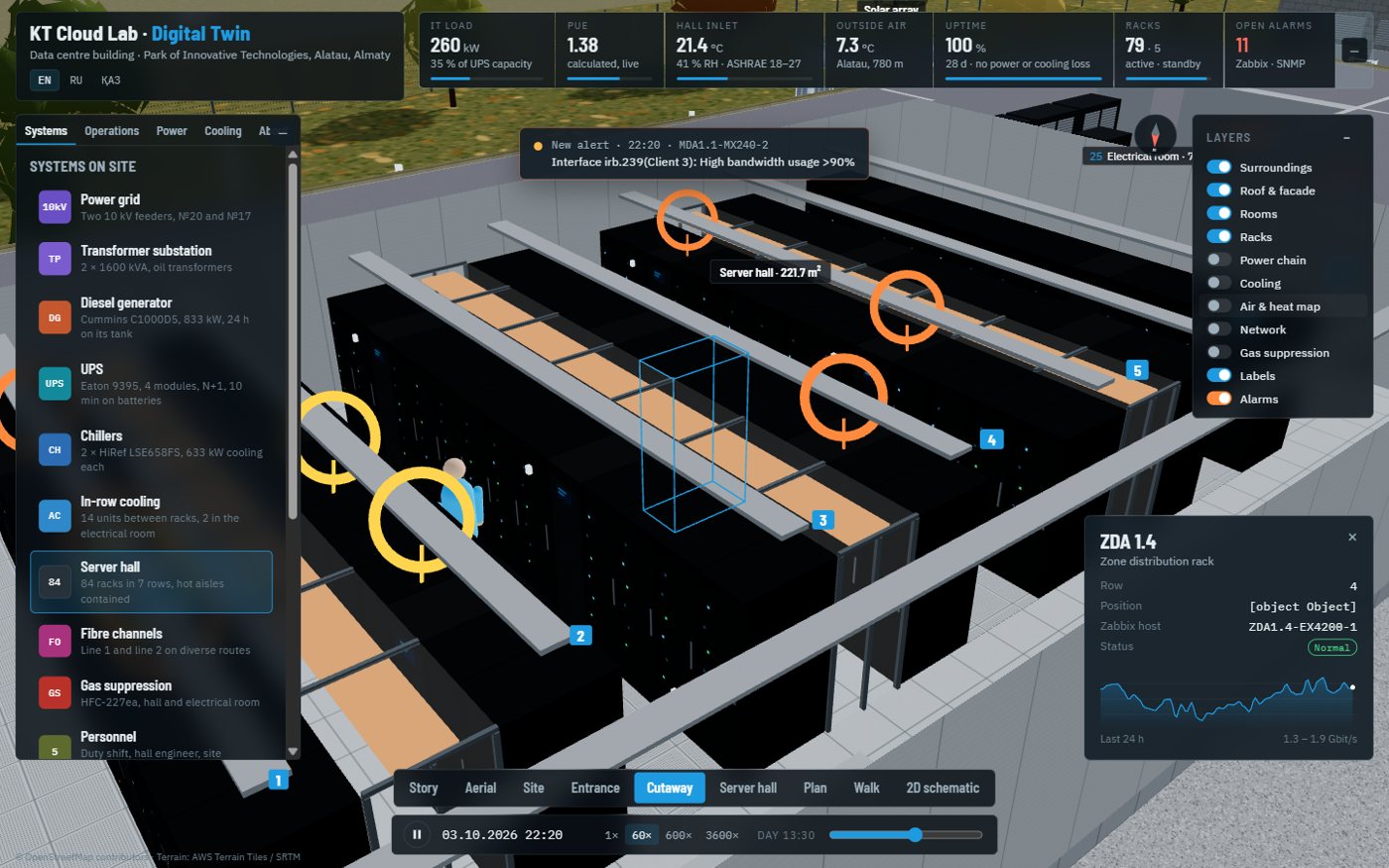
Server hall with sensor points and a rack report panelSensors and racks

Watch sensors, racks and events

Twenty-four temperature and humidity points in the hall, racks coloured by temperature, a report for every rack and the operator's Zabbix event log.

  • Rack report: load, temperature, alarms
  • Event log from the monitoring system
  • Demonstration values until telemetry is connected
Guided story

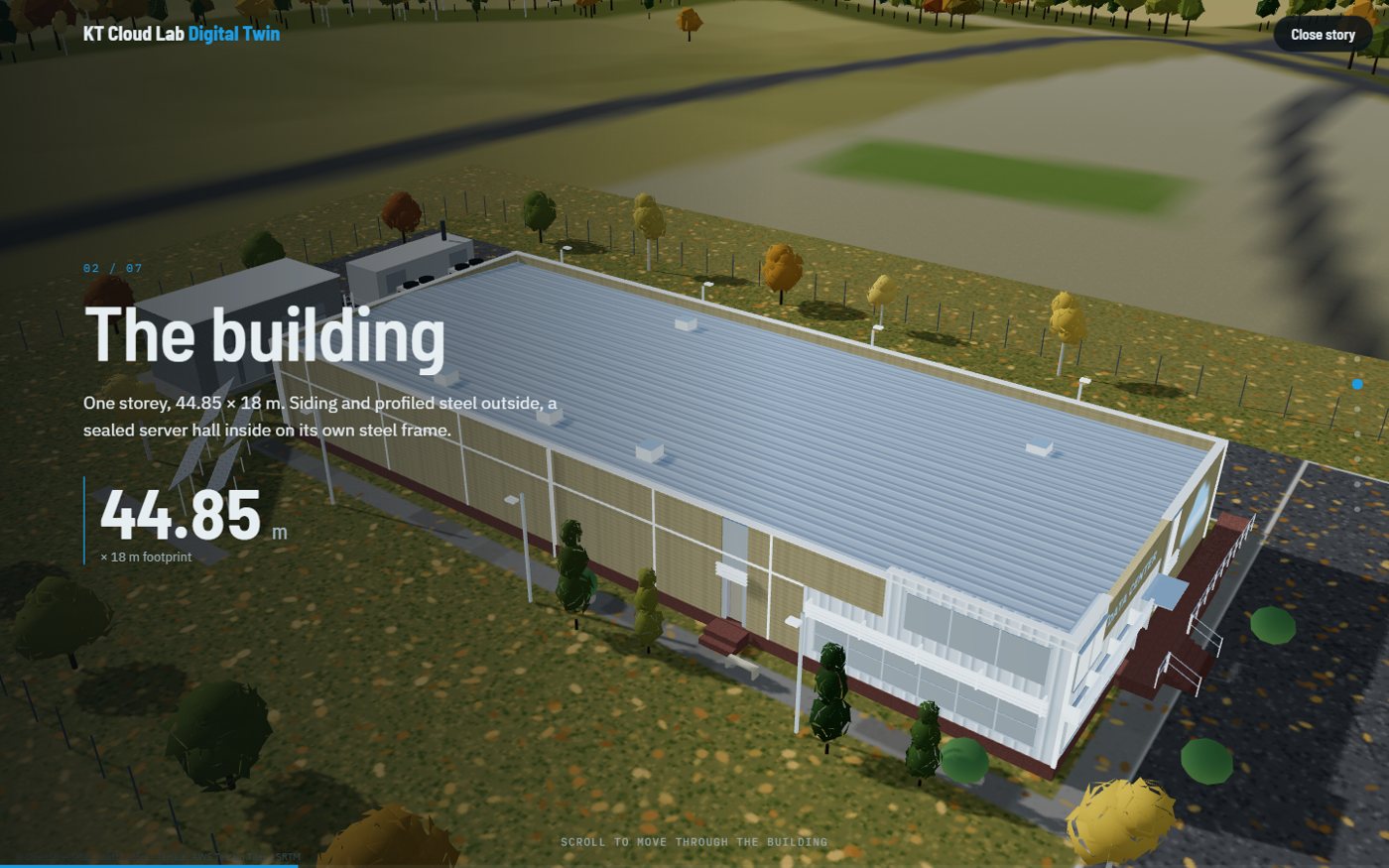
Seven chapters, from the mountains to the rack.

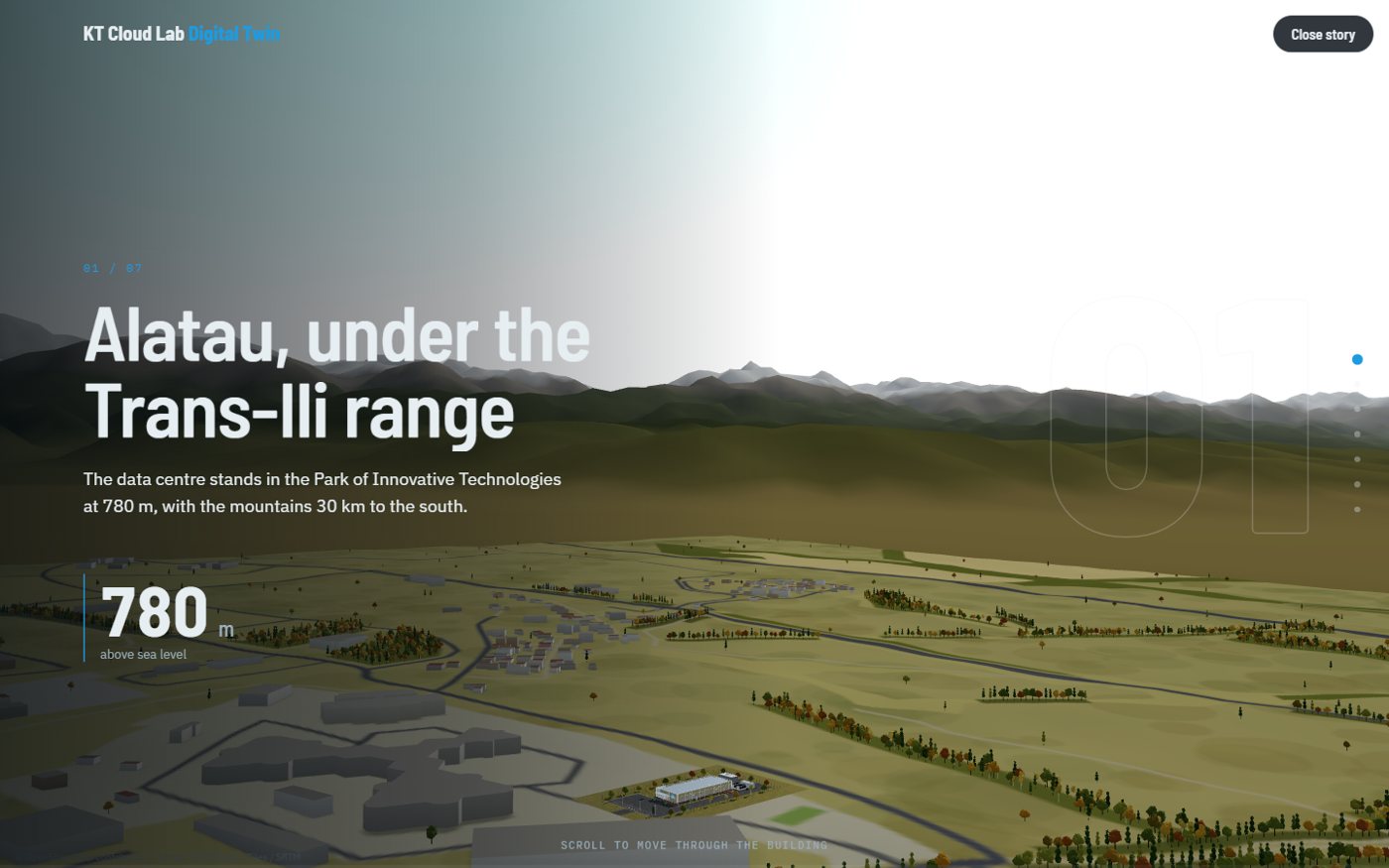
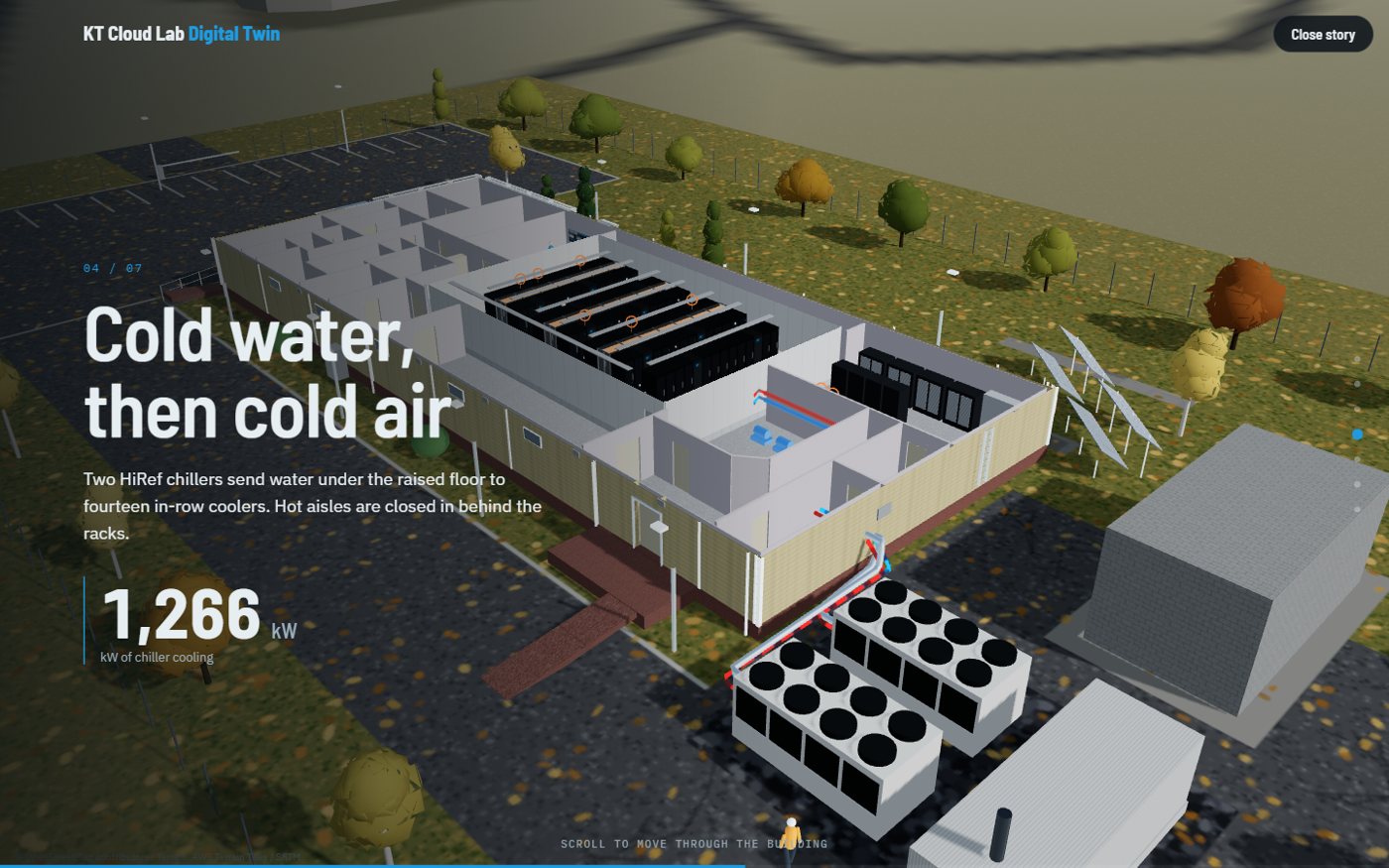
The model opens with a scrolled story: the site, the building, power, cooling and the hall — each chapter with its figure.

Case study

Digital twin of the KT Cloud Lab data centre

The data-centre building in the Park of Innovative Technologies, Alatau. Geometry follows the working drawings; inside are 84 racks in seven rows, in-row cooling, power from two 10 kV feeders with a standby generator, and the operator's Zabbix events.

ObjectTechnology building of a data centre
LocationAlmaty, Park of Innovative Technologies
Floor area736 m² · server hall 221.7 m²
MonitoringZabbix, SNMP, 24-month archive
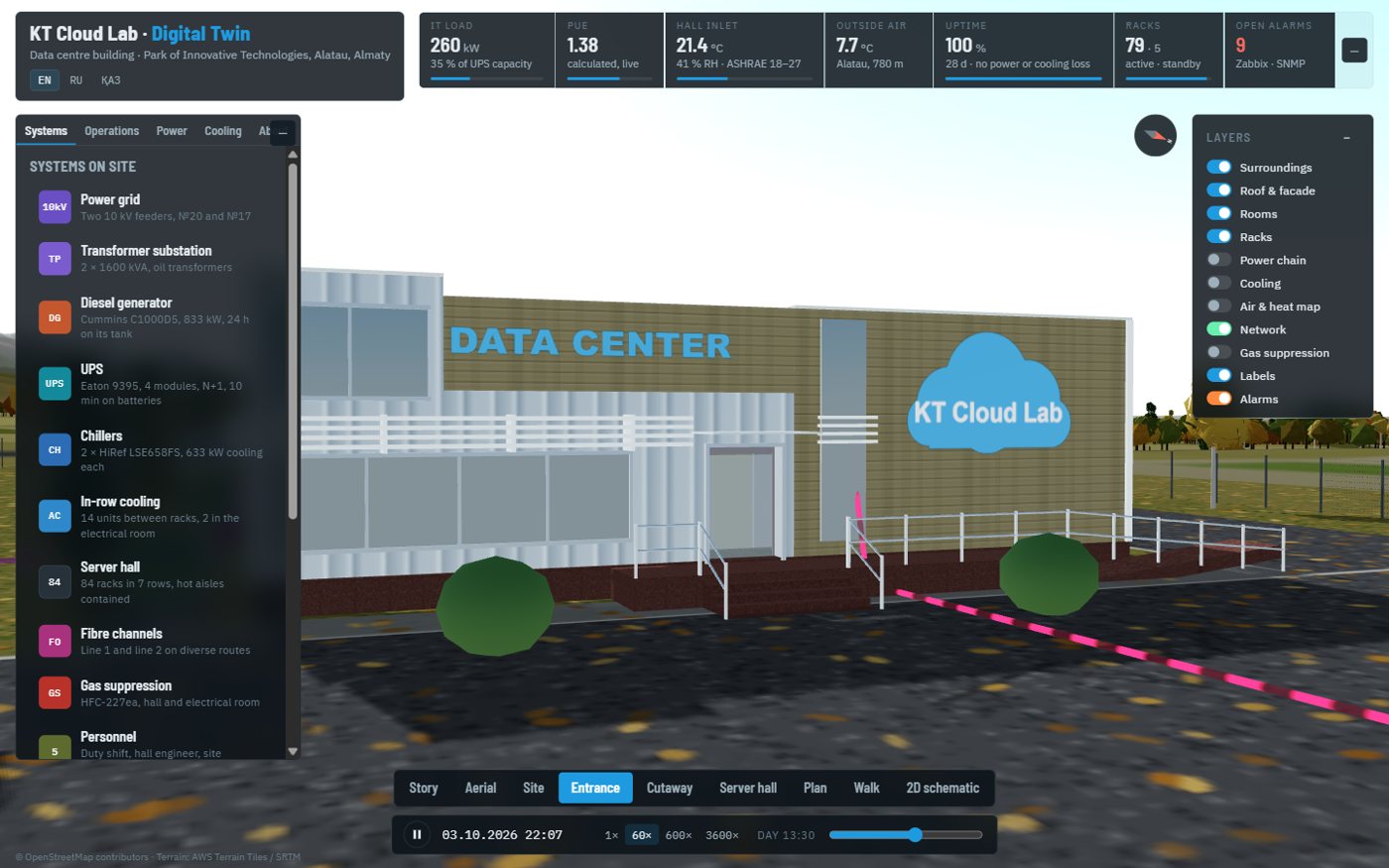
Entrance of the data centre in the modelAerial view of the siteBuilding on the site
How a twin is built

Four steps, in a fixed order.

The depth of each step depends on the object; the order does not change.

  1. 1

    Survey

    Which data already exists, at what interval, in what systems; where the losses are; whether a model is justified at all.

  2. 2

    Model

    Physics, statistics or a combination — chosen by the question the object has to answer.

  3. 3

    Synchronisation

    A data link from sensors, metering and control systems, with checks on completeness and drift.

  4. 4

    Operation

    Scenario runs, alerts and handover: the customer's team operates the model without the contractor.

Three levels of maturity

The term is used loosely. These three differ by how data moves.

01

Digital model

A static representation. Data is transferred by hand; changes on either side do not propagate.

02

Digital shadow

A one-way link. The object feeds the model automatically, but the model does not act back.

03

Digital twin

A two-way link. The model receives live telemetry and returns setpoints, schedules and warnings to the operating system.

Where it applies

Objects where metering already exists.

Data centres

Airflow and heat simulation, placement of high-density racks, failure scenarios for cooling and power.

Thermal modelCapacityFailure scenarios

Power generation and grids

Equipment condition, load modes, maintenance planning by actual wear instead of a fixed calendar.

ConditionLoad modesMaintenance

Industrial plant

Pumping stations, compressors and process lines: failure prediction and selection of an operating mode.

Failure predictionModes

Urban networks

Water, heat and lighting: locating losses and setting the order of replacement.

LossesReplacement order

ISO 23247, Digital Twin Framework for Manufacturing (2021), defines the reference architecture, the digital representation of physical elements and the rules of information exchange. Part 6, on composing several twins into one system, was published in 2026.

Reference architectureDigital representationInformation exchangeComposition of twins
Contact

Discuss a digital twin pilot.

Tell us about the object and the data it already produces. We answer in writing whether a twin is justified and what the first stage would cost.